
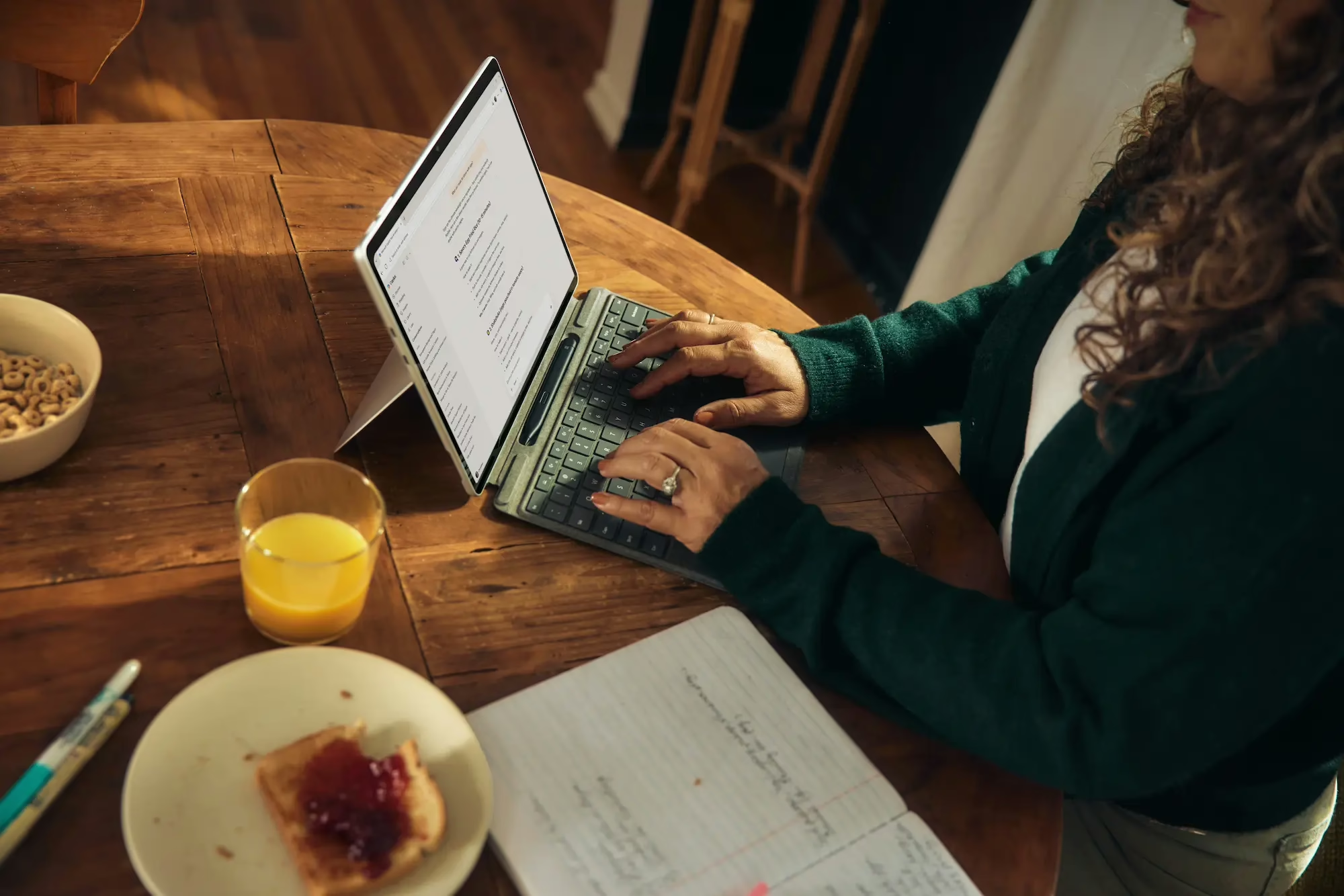
After a few too many years of playing football and some jammed fingers that never quite healed right, the keyboard has always been my natural enemy. I’m a terrible typer. Always have been. So when people start listing AI’s greatest hits, they usually land on image generation or code writing or some chatbot that passed a law exam. Fine. All interesting. But none of it changed how I actually work day to day.
Speech-to-text did.
Not the old kind. Not the “three words, long pause, wrong word, delete everything” version that trained you to hate your own voice. I mean AI-powered STT, the kind that doesn’t just transcribe what you said but understands what you meant. The kind that cleans up the ramble, strips the filler, and hands you back something that reads like you knew what you were saying before you opened your mouth.
The shift is hard to explain until you’ve tried it. Writing has always involved two separate problems for me: the thinking and the typing. The thinking I don’t mind. The typing is the bottleneck, the place where a thought either makes it out or gets lost because my hands couldn’t keep up and the moment passed. With AI-assisted STT, that bottleneck is just gone. I talk the way I think, which is fast and circular and occasionally mid-sentence before the idea is fully formed, and the AI handles the rest. It doesn’t transcribe my mess verbatim. It translates it. Ums removed, structure added, output clean.
A blog post that used to take me two hours of stop-start typing now comes out of a ten-minute voice note. Emails that I’d been putting off because I didn’t want to sit down and write them get done while I’m walking between rooms. First drafts happen in the car. The friction that used to sit between having a thought and getting it written down has almost entirely disappeared, and that’s not a small thing. That’s the difference between ideas that exist and ideas that stay in your head until they don’t anymore.
The AI part matters more than people give it credit for. Raw transcription has been around forever and it was never the answer. What’s changed is the cleanup layer, the model sitting between what your mouth produces and what appears on screen. It’s doing real work: inferring punctuation from cadence, picking the right homophone from context, turning a half-finished sentence into a complete one without changing what you were trying to say. When it works well, and in 2026 it works well almost every time, you forget it’s there. You just talk, and then there’s text.
I use it for everything now. Client briefs, blog drafts, long-form notes after a meeting, even the kind of thinking-out-loud documents I’d never have bothered writing before because the effort wasn’t worth it. The bar for putting something into words has dropped low enough that I actually do it. That’s the part I didn’t expect: it’s not just faster, it’s changed what I bother to capture in the first place.
If your hands work fine and typing feels effortless, maybe this lands differently. But if there’s any friction between your thoughts and the page, any reason you put off writing things down, AI-powered STT is worth trying before you try anything else.
My favorite tool?